ServicesCommercial Roof Replacement
Commercial Roof Replacement in Guthrie
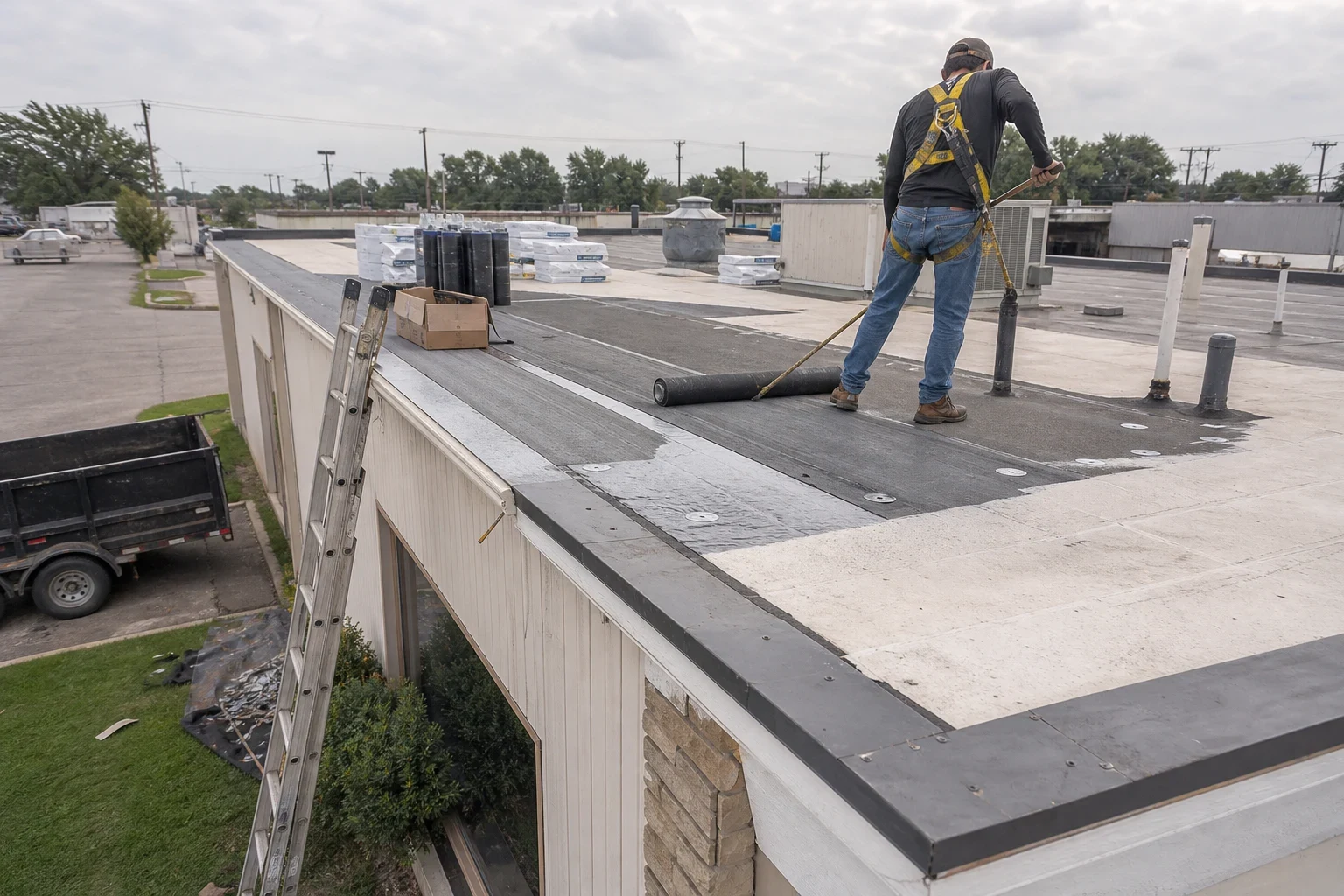
When a flat or low-slope roof is past patching, we replace it with a system that fits your building and is built to pass inspection. We pull the permit, plan around your business hours and keep you informed from tear-off to the final walkthrough.
When replacement is the right call
Most commercial roofs reach a point where repairs stop paying off. Seams keep opening, the insulation underneath holds water, and every heavy rain means another bucket in the stockroom. If that sounds familiar, a new roof usually costs less over the next decade than chasing leaks one at a time. If your roof is mostly sound, our commercial roof repair page may be the better place to start.
We hold an Oklahoma commercial roofing license and an Oklahoma general contractor license, so the roofing and the related work, like replacing rotted deck or rebuilding an equipment curb, can stay under one contract. We also explain the code side in plain words: what the inspector will check, why the energy code may call for more insulation once the old roof comes off, and how wind uplift rules shape the way the new membrane is attached.
What a replacement with us includes
- Moisture survey before pricing
- We take core samples and check for wet insulation so we know whether a full tear-off is needed or a recover is allowed. Code does not allow a new roof over wet insulation or over two existing layers, and we show you what we found.
- Inspection scheduling and paperwork
- We file the application with the city, post the permit card on site and book each inspection. You don't have to call the city or wait at the building for an inspector.
- Tear-off and deck repair
- We remove the old system down to the deck and replace damaged metal or wood decking. Anything that changes the scope gets photographed and discussed with you before we go further.
- Insulation and drainage
- New insulation goes in to meet current energy code. Tapered insulation or crickets can steer water toward the drains so it stops ponding in the same low spots.
- Membrane, flashing and edge metal
- We install TPO, EPDM, modified bitumen or metal, depending on what suits the building, then flash every curb, pipe, parapet and wall. Edge metal is fastened to resist uplift, because roof edges are where wind failures usually begin.
- Cleanup and closeout
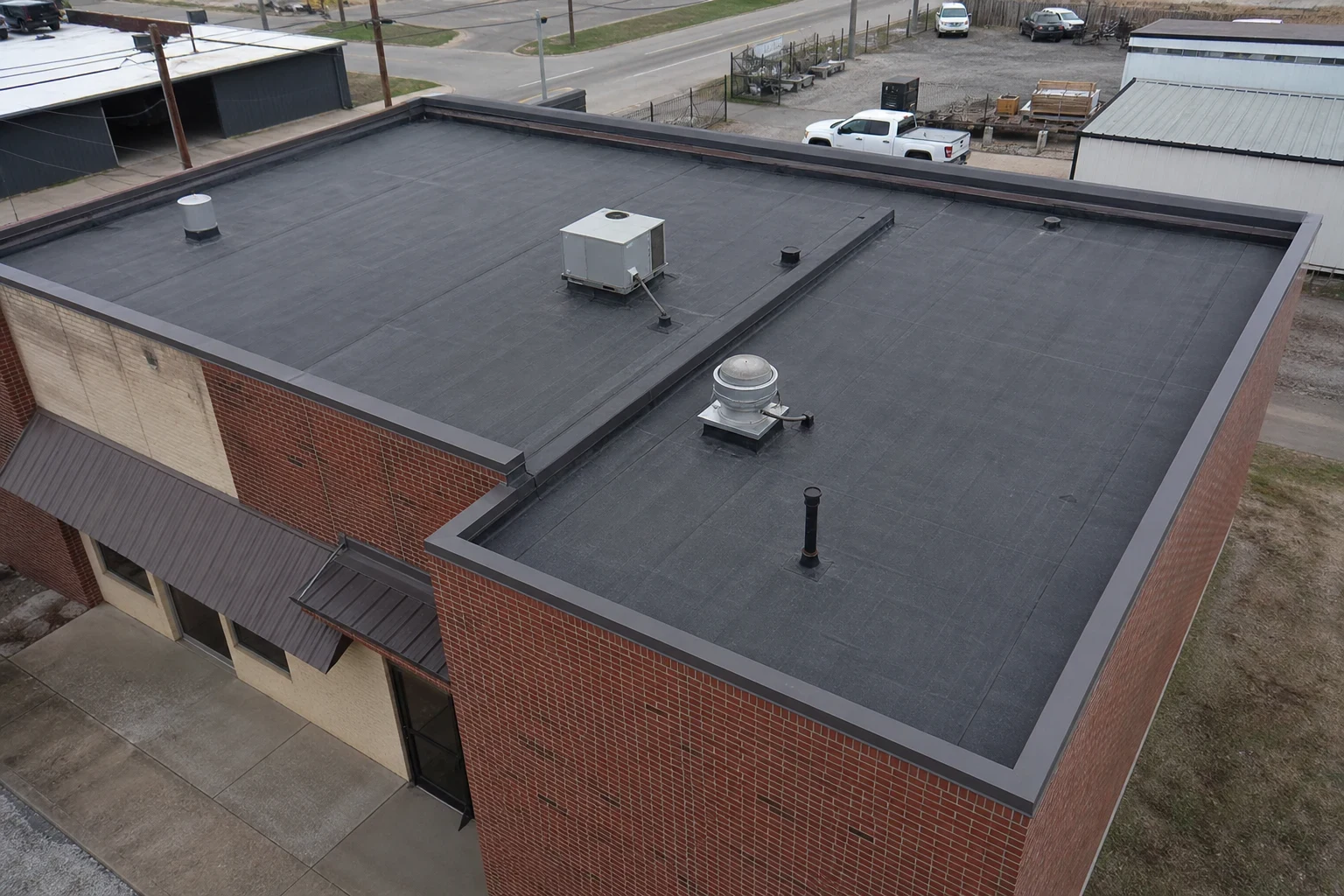
- We sweep for fasteners, haul away debris and hand you the inspection sign-off, the product documentation and photos of the finished roof.
Signs your commercial roof needs replacing
Leaks that keep moving
When water shows up in a new place after each repair, the problem is usually spread across the roof rather than one bad seam.
Soft or spongy spots
If the roof gives under your feet, the insulation or deck below is wet. Wet insulation loses most of its value and can rust a metal deck from the top down.
Standing water days after rain
Ponding stresses seams and speeds up aging. When slope or drain problems can't be fixed with a repair, a replacement with tapered insulation is often the answer.
Shrinking, cracking or blistering
EPDM pulling away at the edges, TPO with cracked seams and modified bitumen full of blisters all point to a membrane at the end of its life.
A history of hail and wind
Oklahoma spring storms can bruise membranes and loosen edge metal in ways you can't see from the parking lot. Our storm damage repair page explains how we check for that.
What moves the price
Every commercial roof is priced from its own survey, so we don't quote by the square foot over the phone. What we can tell you on a call is what drives the number. The written estimate breaks each part out, so nothing shows up later as a surprise.
Size and layout
Square footage matters, but so do penetrations, parapets and changes in roof height. A small roof with twenty curbs can take longer than a large open one.
Tear-off or recover
If the existing roof is dry and only one layer deep, code may allow a recover, which saves on removal and disposal. Wet insulation or two existing layers means a full tear-off.
Deck and insulation condition
Rusted metal deck or rotted wood has to be replaced, and current energy code may require thicker insulation than the building had before.
Membrane choice
TPO, EPDM, modified bitumen and metal differ in material and labor cost, and in how they handle summer heat, foot traffic and rooftop equipment.
Access and timing
Crane time, working around open hours, and after-hours or weekend shifts all affect labor.
How the project runs
- 1
Roof survey and written scope
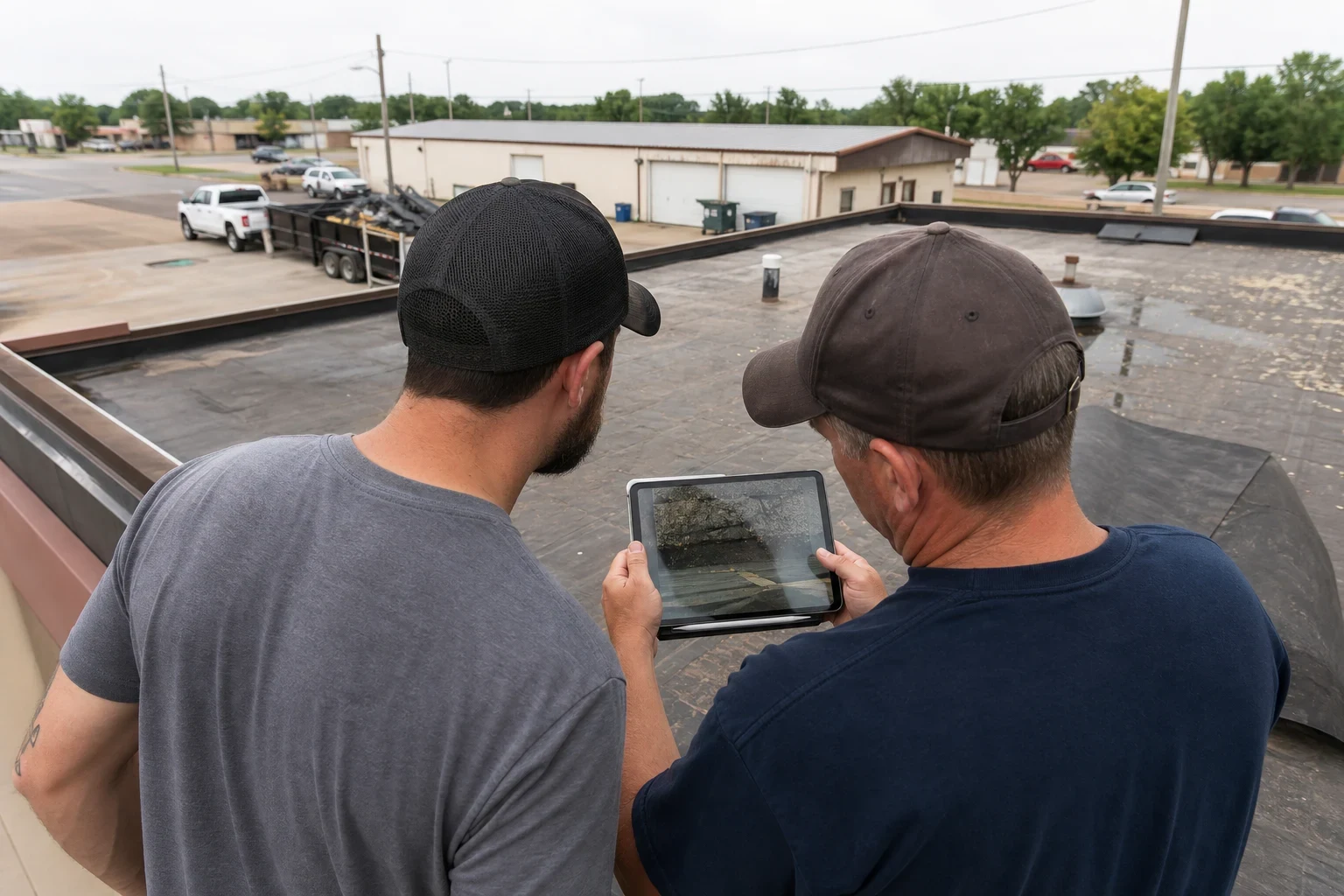
We walk the roof, take cores, check drains and rooftop units, and write a line-item scope that says what is being replaced and why.
- 2
City approval and scheduling
We take care of the city paperwork and plan the work around your hours, deliveries and tenants. You'll know ahead of time which days will be loud and where the dumpster or crane will sit.
- 3
Tear-off in sections
We remove only what we can dry in the same day, so the building isn't left open overnight. Interior areas under the work get covered when needed.
- 4
Install and inspect
Insulation, membrane and flashing go on, and the inspector checks the work at the required stages. Anything flagged gets fixed before we move on.
- 5
Final walkthrough
We walk the roof with you, go over the photos and the inspection record, and leave the site clean.
Commercial roof replacement questions
Do we need a permit to replace our commercial roof?
Yes. A commercial reroof needs a building permit in Guthrie and in most nearby towns, and the work is inspected. We handle the application and schedule the inspections. When the job is done, you get the final sign-off for your records.
Can you put a new roof over the old one?
Sometimes. Building code allows a recover only when the existing roof is dry, sound and not already two layers deep. Our core samples tell us which case you're in, and we'll show them to you before you decide.
Can our business stay open during the work?
In most cases, yes. We stage materials away from entrances, keep a clear path for customers and tear off only what we can close up the same day. If a section needs quieter hours, we plan that with you in advance.
Which roofing system is right for our building?
It depends on the slope, what sits on the roof and how the building is used. TPO reflects heat well, EPDM handles movement, modified bitumen stands up to foot traffic, and metal suits roofs with enough pitch. We'll walk you through the trade-offs for your roof specifically.
How long does a commercial roof replacement take?
That depends on size, deck condition and weather. You'll get a working schedule with the written scope, along with notes on which days affect your operations. We watch the forecast closely and won't open up a section with a storm on the way.
Let's look at your building's roof
Tell us about the leaks, the age of the roof and how the building is used. We'll set up a survey and explain the inspection and code steps before anything is scheduled.